In the first of our four-part series looking at tool longevity, Stuart Ruffles from Purdy looks at the myth of disposable brushes, exploring why these cheaper options don’t provide long term value and can even hinder profit and professionalism.
Controlling costs is an everyday part of the decorator’s job. Materials, labour, fuel and time all add up quickly, so of course it makes sense to shave a few pounds off the budget wherever possible. At first glance, cheap multipack brushes and rollers seem like a bargain. They’re an easy purchase; hand over a few quid, job done.
But behind this ‘one and done’ approach lies one of the most persistent false economies in decorating, and it’s quietly chipping away at profits over time. When tools are treated as disposable, replacement becomes routine rather than exceptional, and the true cost begins to climb.
Lifetime value
Overcoming this requires a shift in thinking, moving away from upfront price alone and towards lifetime value and cost per use.
Lifetime value offers a more realistic way of assessing whether a tool is a good investment. Rather than focusing solely on what a tool costs on day one, lifetime value considers how long it lasts, how consistently it performs and how often it needs to be replaced.
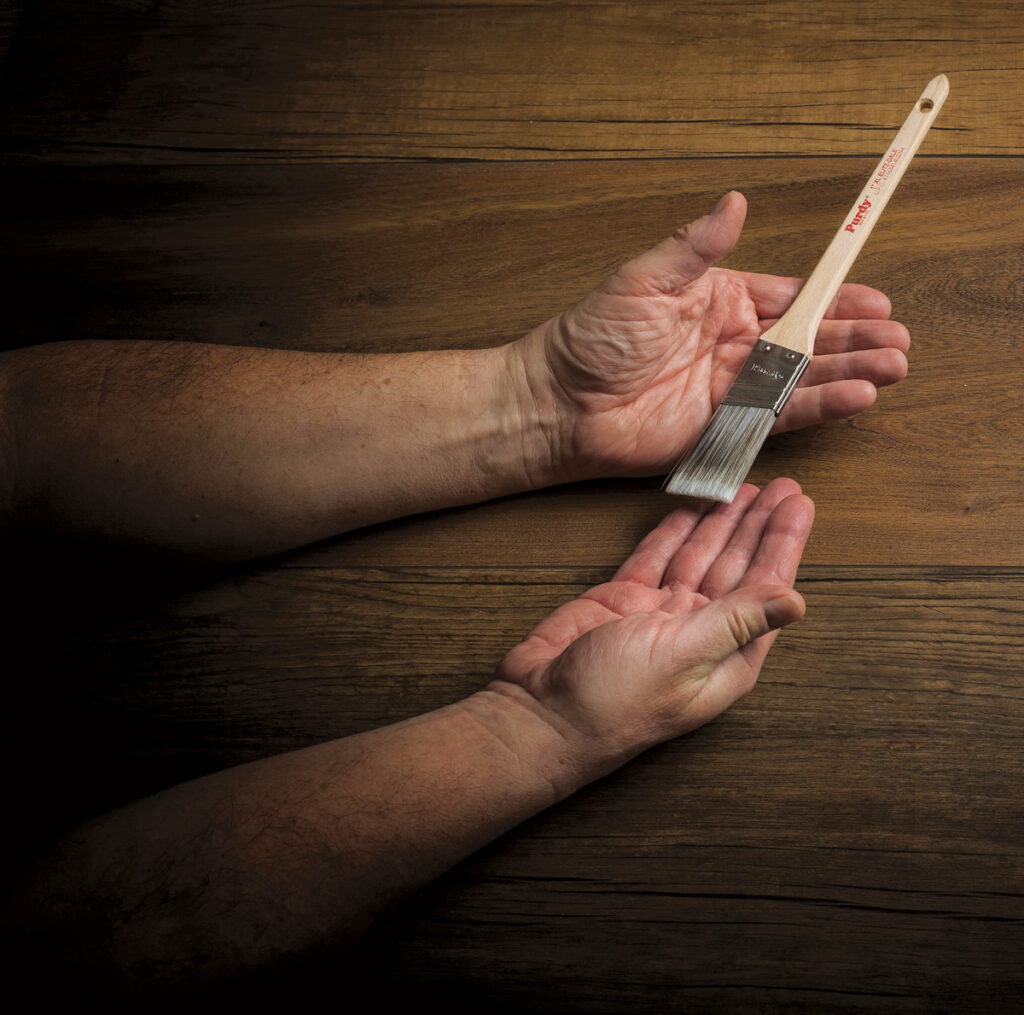
A higher-quality brush that keeps its bristle integrity, cleans easily and delivers the same finish month after month has a far greater working life than a cheaper alternative, even if the initial outlay is higher.
Cost per use
Closely linked to lifetime value is cost per use, a calculation that can quickly change how decorators view their purchasing decisions. Cost per use is simply the total cost of owning a tool divided by the number of times it is used.
A £5 brush that lasts for five uses costs £1 every time it comes out of the van. Whereas a £25 brush used one hundred times costs just 25 pence per use. Looked at this way, the supposedly expensive tool is actually the cheaper option, particularly over the course of a year or more.
Hidden costs
This way of thinking becomes even more compelling when the hidden costs of cheap tools are taken into account. They can compromise the finish, slow down cutting-in, and lead to additional coats or time spent correcting flaws that were not caused by the paint or the technique, but by the tool itself.
In a trade where reputation and repeat business matter, these small setbacks can
have major consequences.
Simply better tools
Time is another often-overlooked factor. Quality tools are designed to work with the decorator, not against them. Better paint pick-up, smoother release and more consistent coverage all contribute to faster, more efficient working. Over weeks and months, the time saved by using tools that perform reliably can easily outweigh the difference in purchase price.
For professionals, the most cost-effective approach is to treat tools as an investment rather than a consumable. That means choosing tools that are built to last, maintaining them properly and judging their value over years of use rather than a single project.
So rather than opting for the cheap brush that loses its shape after a day, the roller that sheds fibres halfway through a wall, or the scraper that blunts almost immediately;
it makes sense to invest in a higher quality option that will protect your reputation and your wallet.
