External timber is under constant pressure from the elements, and without a robust maintenance system, costly call-backs and premature failure are inevitable. Wind-driven rain and damp conditions allow water ingress, creating the ideal environment for mould, mildew and fungal decay. Over time, this not only discolours the surface but compromises structural integrity.
The takeaway is clear: Surface coatings alone are not enough. Effective cladding protection requires a system approach that starts with remediation, followed by deep protection and finishing with a durable, UV-resistant topcoat…
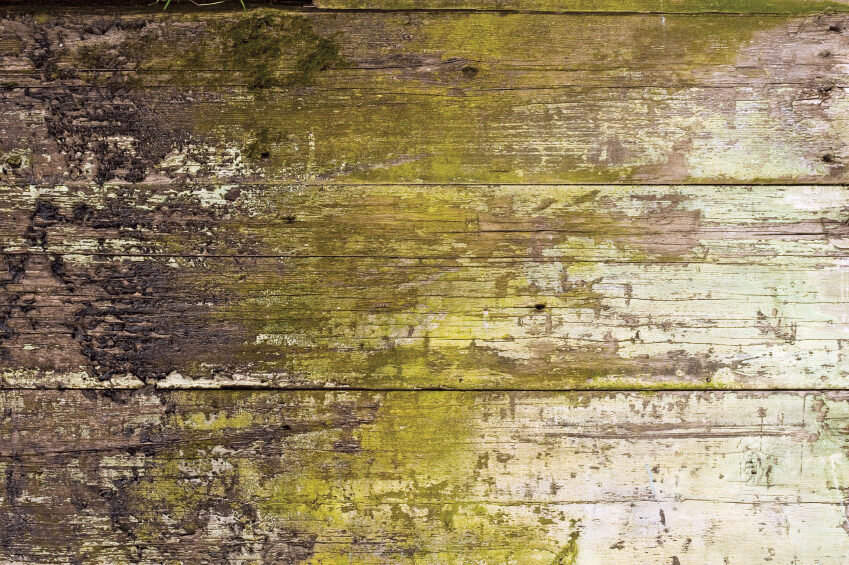

Treat before you protect
Where cladding shows signs of contamination such as algae, mould or mildew, this must be addressed prior to any coating application. A professional-grade fungicidal wash, such as a mould and mildew cleaner with active biocides, is typically recommended to kill spores and inhibit regrowth.
Best practice involves applying the cleaner evenly by brush or roller, allowing sufficient dwell time (often up to 24 hours) to maximise effectiveness, followed by a thorough rinse. Adequate drying time is essential before moving to the next stage.


Restore weathered wood
Grey, UV-damaged timber doesn’t necessarily need replacing, restoration products based on oxalic acid like Barrettine’s Wood Reviver, can effectively remove the degraded surface layer, revealing the original tone of the wood beneath. For trade use, these products are applied liberally along the grain and kept damp during application to ensure even activation. After 15-30 minutes, the surface is agitated with a stiff, non-metallic brush before rinsing clean. The result is a visibly revived substrate, ready for protection.

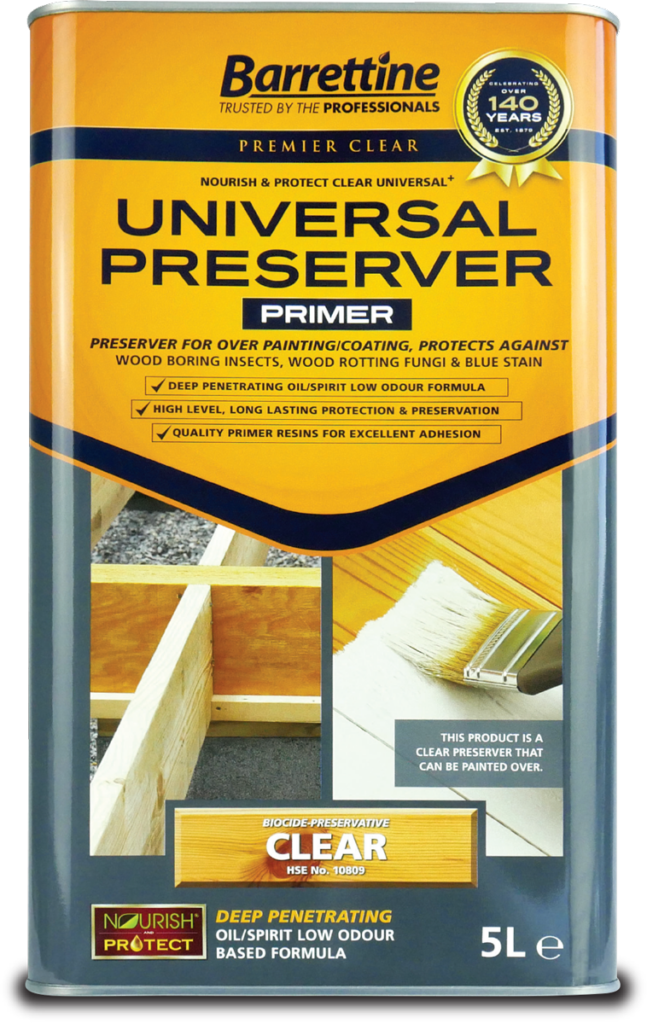
Preservative protection
Once the timber is clean and dry, a high-quality preservative primer forms the foundation of any long-term system. Typically oil or spirit-based like Barrettine’s Universal ‘Primer’ Preserver, penetrates deeply into the timber, protecting against fungal decay and insect attack.
Application usually involves 2-3 thin coats, allowing adequate drying time between each. This stage is critical for extending the service life of the cladding and should not be overlooked, particularly on new installations or exposed elevations.

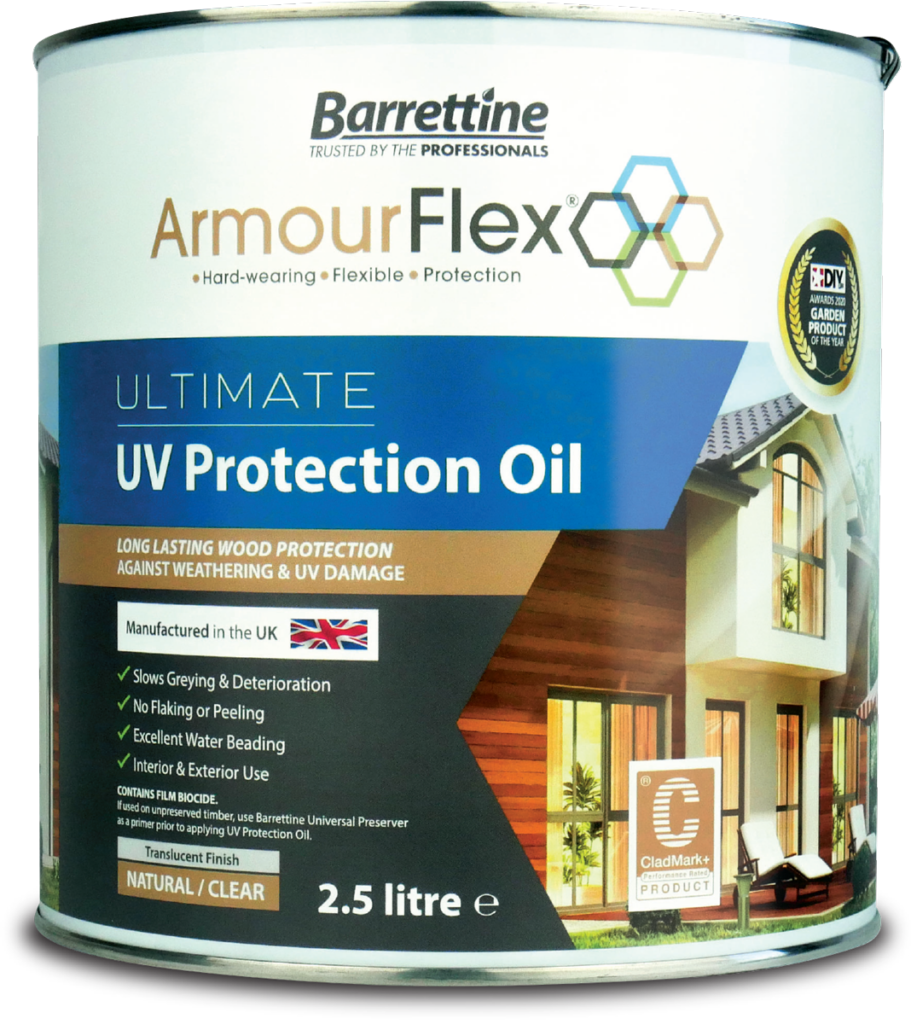
UV and weather defence
The final stage is the application of a high-performance UV protection oil, like Armourflex Ultimate UV Protection Oil. This premium cladding oil works by dispersing UV radiation as heat, slowing the degradation process that leads to greying. At the same time, it provides a hydrophobic, water-repellent barrier, reducing moisture ingress. A microporous finish allows the timber to breathe, preventing issues such as peeling, blistering or cracking that are often seen with film-forming coatings. A generous first coat saturates the timber, followed by 2-3 lighter coats are sufficient, with drying times of a few hours between applications.