High-quality colour and long-lasting durability are at the heart of a perfect finish on any job, but perhaps especially so when you’re working within commercial environments like schools and care homes.
Read on, as we talk with Dillon Cilliers, Senior Product Manager at Valspar Trade, about how you can deliver on colour and durability every time, meaning you can approach commercial projects with confidence…
Why are commercial projects different?
Compared to your average painting job for Mr and Mrs Smith down the road, aside from the size and scale of the job, the education and healthcare sectors are unique in that the buildings are always in use. With this comes the need to minimise disruption and downtime, meaning you need to get in and out as quick as possible, all without impacting on the final finish. Opportunities for maintenance can be limited to certain periods, weekends or school holidays in the case of education buildings.

How can the paint help with easier maintenance?
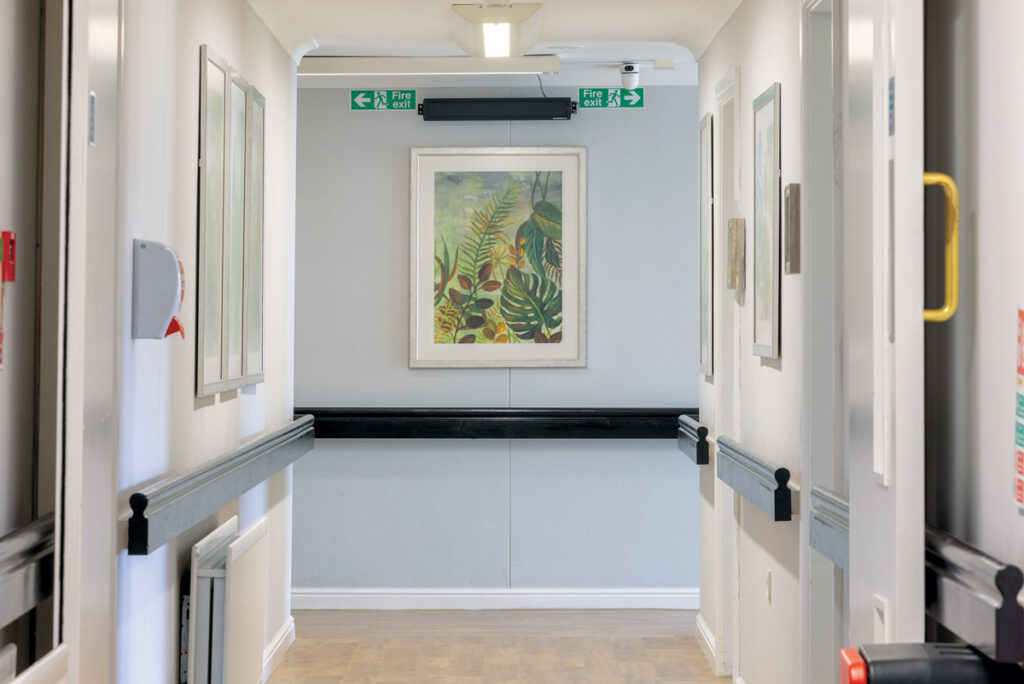
Not every paint will be up to the job, especially when it comes to the high traffic areas found within some commercial buildings, think corridors, hallways and circulation areas. You need an emulsion that will stand up to the daily scuffs, bumps and scrapes, minimising the need for regular touch-ups or call backs.
With maintenance schedules tight, consider looking for paint that is certified as scrubbable according to ISO 11998. This standard evaluates a paint’s resistance to repeated cleaning, with Class 1 meaning the paint loses less than five micrometres of film after 200 scrubs. By opting for a scrubbable paint, such as Valspar Trade Tough Matt, surfaces can be easily cleaned using warm soapy water to remove marks or stains, rather than requiring regular, costly and time-consuming repaints.
Opacity is also important. Fewer coats mean a job can be completed quicker, with less time spent watching paint dry, ideal when you consider the often-narrow window of opportunity for refurbishments and need to minimise disruption.
What about colour, how important is it?
Colour is about far more than just picking a colour that looks nice on the wall, as is the case for residential jobs. The psychology around colour has been heavily researched, including its influence on how people interact with and experience a space.
For schools, the emphasis should be on how the interior can inspire productivity and learning. While within healthcare settings, it’s all about creating a calm and welcoming look and feel. Colour can help with wayfinding too, with individual zones assigned their own colour.
With increased attention paid to creating inclusive environments, it’s also important to think about how you can prevent additional unnecessary stress being caused to patients, residents and visitors.
For example, certain colours and finishes have been classed as ‘dementia-friendly’, helping to reduce confusion, anxiety and falls.
How to ensure the perfect colour match every time?
Achieving a perfect colour match is an exact science. There are many factors at play, from the quality of the pigments used and size of the colour database, to the tinting machine, shaker and colour spectrometer. Carefully calibrated, the tinting machine’s computer system first dispenses the perfect amount and set combination of pigments required to create the desired colour. The can will then be heavily shaken to ensure the pigment is thoroughly combined with the base formulation for a smooth, consistent and true colour.
When you use Valspar Trade paint, it’s good to know that every colour match is automatically saved onto a central database, accessible from any UK TradePoint store. This makes it easy and hassle-free to gain access to the exact same colour further down the line, making for easier touch-ups or a uniformed group approach across several sites.
