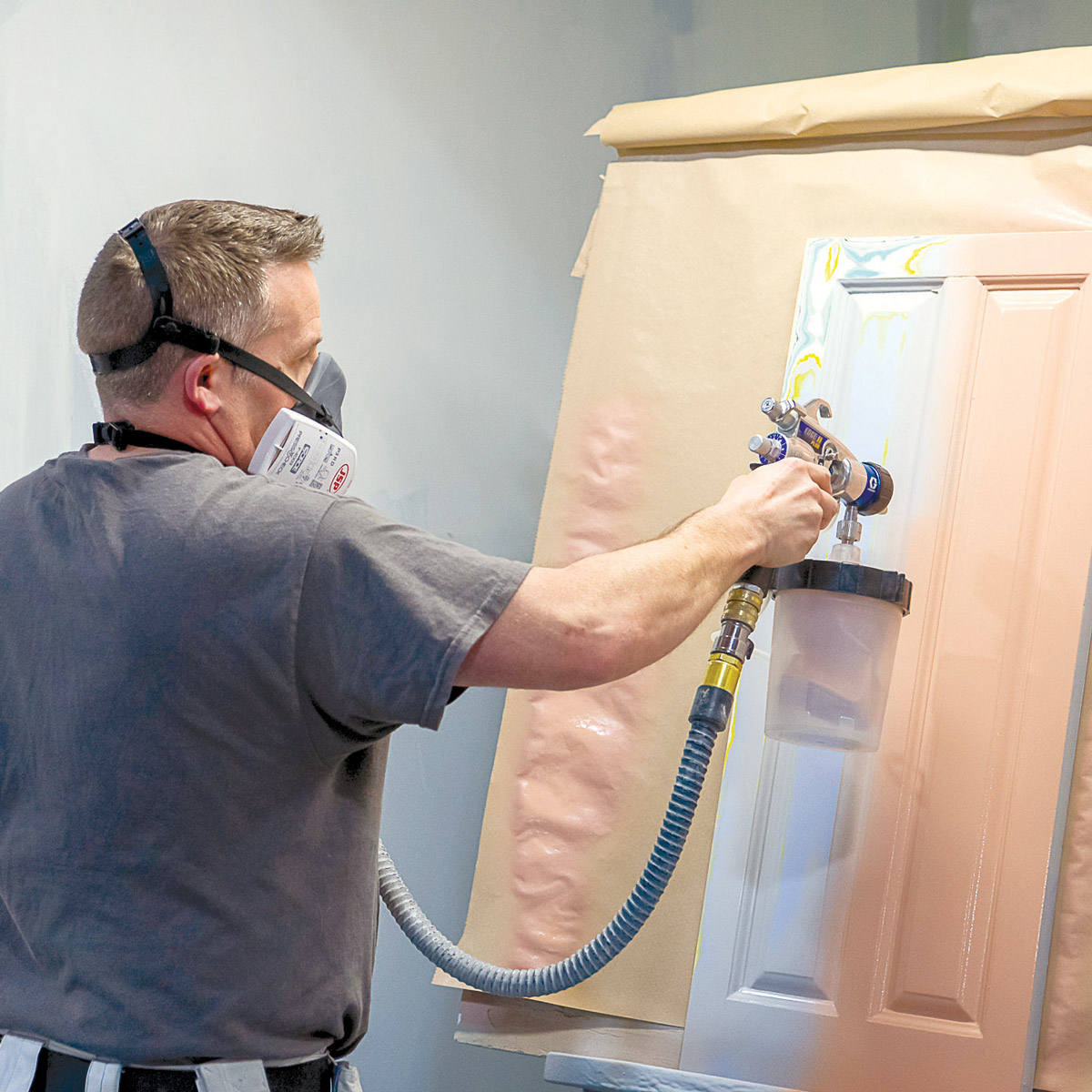
with Dulux Trade Diamond Matt

When done right, spray application can be hugely beneficial for decorating businesses, from helping to speed up application to achieving a smooth, uniform finish across large spaces.
Matt Gray, Skills Development Consultant for Dulux Academy at AkzoNobel, shares practical advice on preparation, equipment, technique and product choice to help decorators get the best results from spray.
The benefits of spray application
More and more professional decorators are adding spray application to their skillset, and it’s easy to see why. As spray can help decorators cover larger areas quickly, it is often a more time efficient method than traditional brush and roller. By speeding up application time, decorators can minimise disruption for their customers and potentially even complete more jobs across the week, helping to increase their earning potential.
However, spray should not be viewed as a shortcut. A professional result still depends on thorough preparation, the right equipment, appropriate paint selection, and good technique.
Preparation comes first
Preparation is essential regardless of the application method. Before spraying, it is important to carefully mask floors, windows, fixtures, fittings and any areas that are not being decorated. Surfaces should also be sound, clean and dry, with loose paint, dirt, grease and dusty residues removed before work begins.
Choose the right spray system and paint
Choosing the right spray system for the job is key, as different systems work in different ways and may require specific paint products and set-ups.
For walls and ceilings, the best spray set up would be airless. This method forces paint through a spray tip under pressure and delivers a larger amount of paint but still providing full control.
Most wall and ceiling paints can be applied using spray, manufacturers will recommend tip sizes and pressure, and suggest whether thinning the paint is required to create the right consistency. All of these factors can affect paint flow and the finished result, so always check the manufacturer’s guidance before starting.
The type and age of equipment, substrate and site conditions can also impact application, so it is important to carry out a test spray first. This can help check the fan pattern, paint flow and finish, and enable decorators to make any adjustments before tackling the whole room.
Build your spray skills
Whether you are new to spray or looking to refine your technique, training can help build confidence before taking it to site. Dulux Academy offers dedicated spray training, which covers equipment selection and maintenance, preparation skills and application technique, helping decorators expand their skillset and deliver the same quality finish their customers expect.

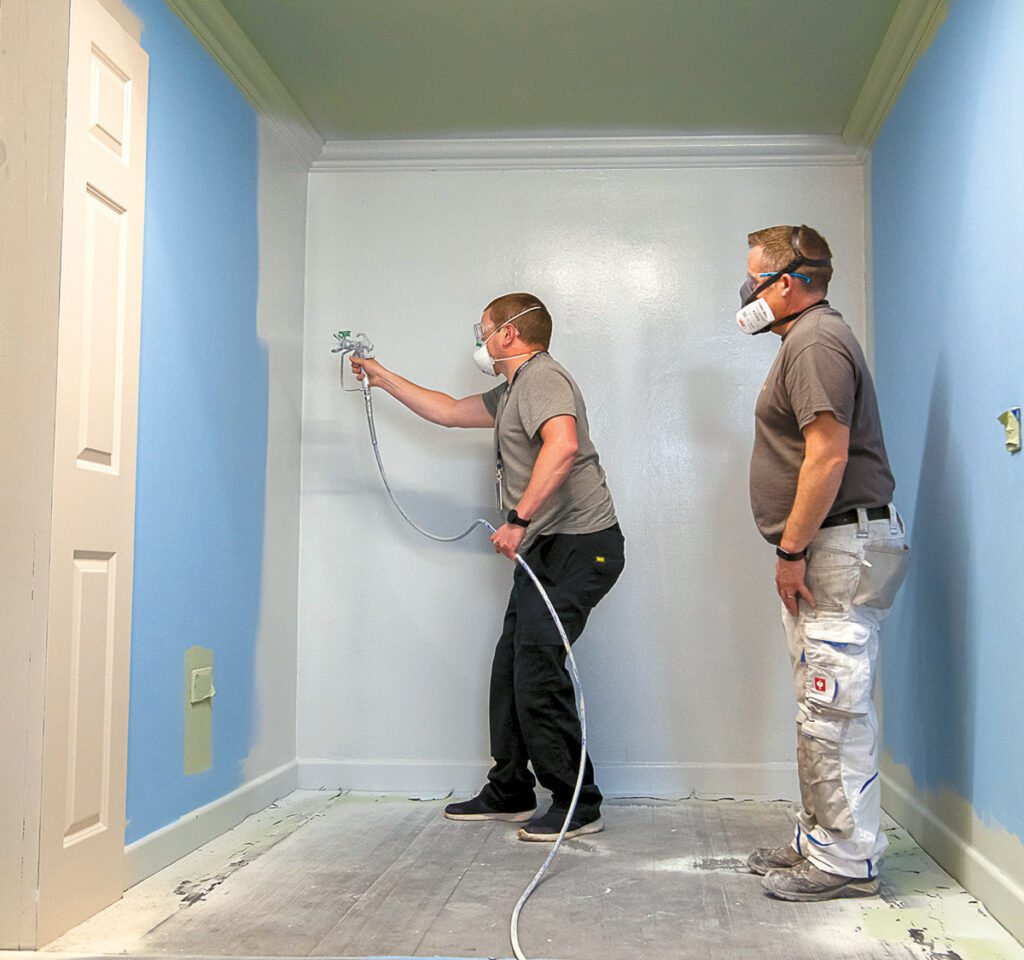
Spraying with Dulux Trade Diamond Matt
For busy interior spaces that need exceptional durability with a smooth, low-sheen matt finish Dulux Trade Diamond Matt is a great solution.
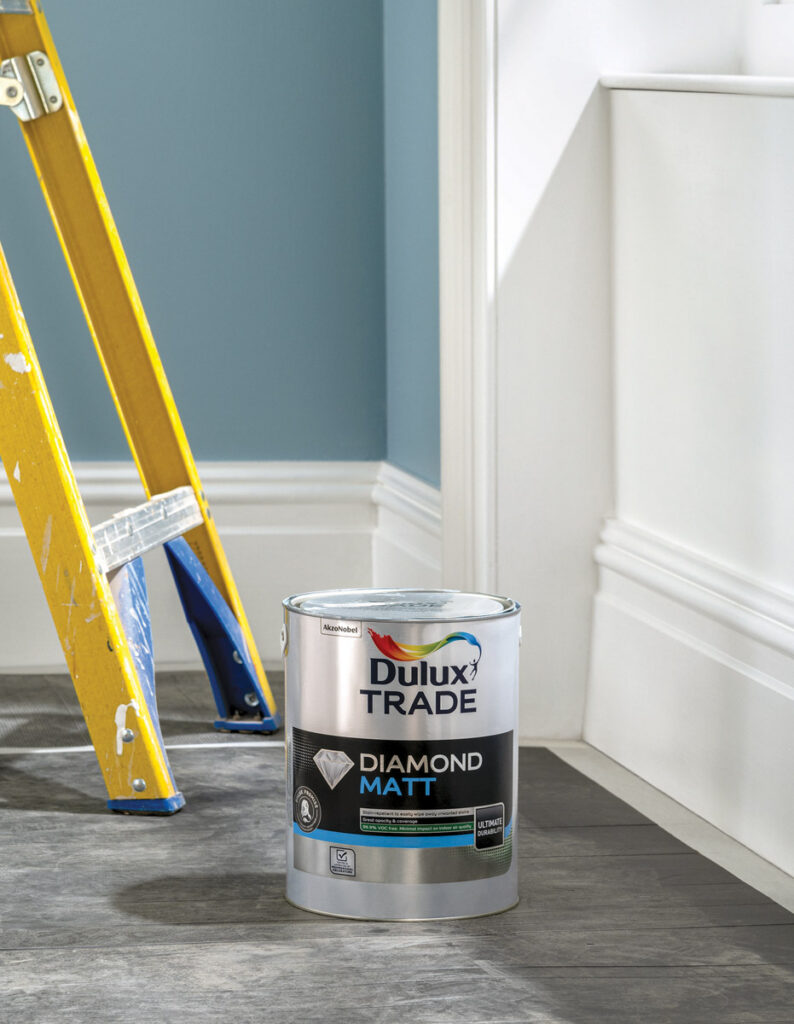
Its Stain Repellent Technology helps to prevent stains from setting into the surface, making everyday marks easier to clean so the finished job looks better for longer.
Diamond Matt has also been tested to withstand up to 10,000 scrubs and achieves Class 1 ISO 11998 and Type C BS 7719 scrub ratings, giving decorators reassurance that the finish they apply can cope with their customers’ cleaning regimes. It’s called Diamond for a reason.
In addition, it is suitable for airless spray application, allowing decorators to combine the efficiency of spray with a durable, smooth matt finish. For the best results, use a 515 or 517 low-pressure tip at 1,300 to 1,700 psi, or alternatively a 517 tip at 2,000 to 2,400 psi. Thinning is not usually required, although up to one part clean water to 10 parts paint can be added if needed.
