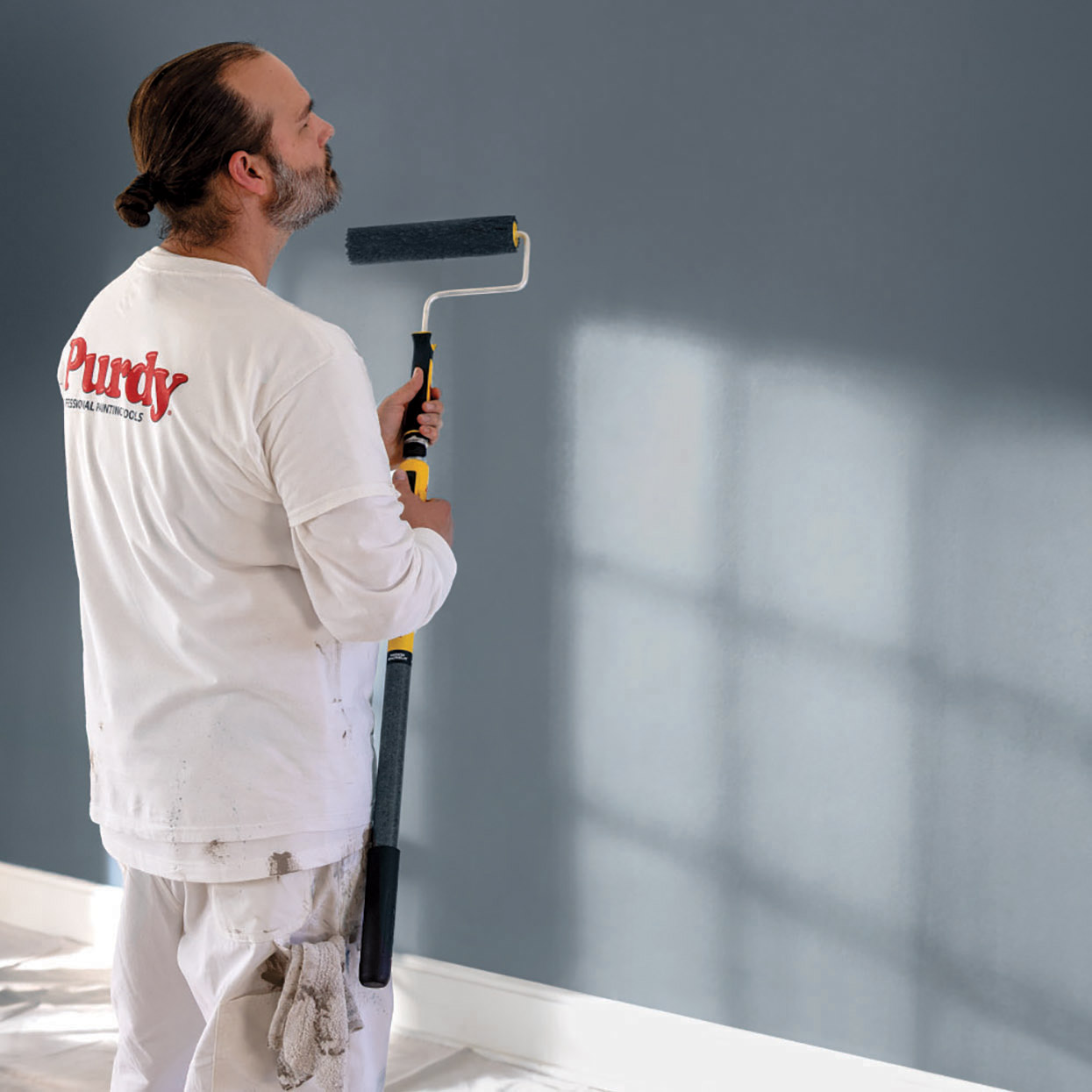
In the professional decorating trade, time is quite literally money. Every professional decorator faces the persistent challenge of balancing daily output speed with the immaculate finish clients demand.
Productivity and quality finishes
By Jimmy Englezos, Senior Brand Manager at Purdy
To protect profits, it can be tempting to view application tools as disposable commodities, opting for low-cost, ‘one and done’ brushes and rollers. However, this approach is a dangerous false economy as cheaper tools actively erode productivity, slow down application, and compromise the final finish, whereas investing in high-quality equipment pays immediate dividends in speed, comfort and workmanship.
Real productivity is not about working faster and rushing, it is about working smarter and continuously, without unnecessary interruptions. Low-quality or budget tools introduce friction at every stage of the decorating process. Poorly bonded filaments shed into fresh paint, forcing decorators to stop, pick out loose bristles, and re-lay topcoats.
Low-quality can also mean less structural integrity, so brushes and rollers quickly lose shape and force decorators to work twice as hard to maintain a straight cut-in line.
When a tool must be thrown away mid-job or after a single use, the cumulative cost of replacement, wasted paint payload and lost labour time, rapidly outweighs upfront savings. This false economy extends into preparation and application dynamics.
Premium tools feature securely bonded filaments, alongside split-end, ‘flagged’ tips that can hold more paint and release it with minimal drag. Stiffer filaments push heavy coatings across rough surfaces, while ultra-fine filaments lay down delicate trim paint without micro-ridges.
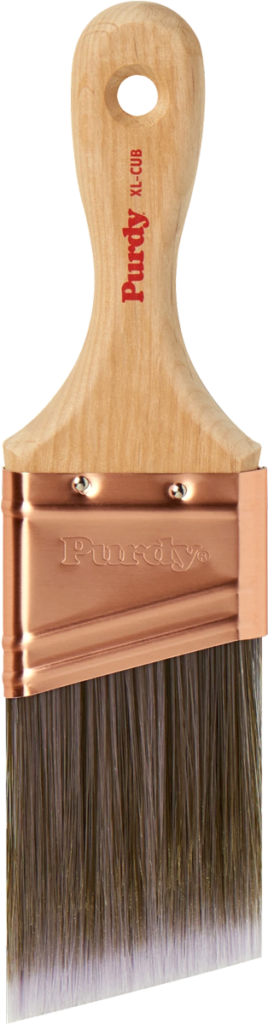
Often overlooked, the handle is a key factor when choosing professional quality brushes. For example, a long and thin ‘rattail’ handle allows it to be held like a pencil to enable fine and precise control.
In contrast, a thick and rounded ‘beavertail’ shape is designed to fit comfortably in the palm of the hand, ideal when painting large areas. Meanwhile brushes that have a ‘short’ handle, such as the Purdy XL Cub, allow easier access and better control in tight spaces and hard to reach areas.
A wooden handle will often be the most comfortable, especially when it is used for extended periods of time. For example, Purdy uses high quality alderwood as it is lightweight, durable and moisture wicking, absorbing sweat for a more comfortable grip.
Instead of struggling with budget kit, specifying fit-for-purpose Purdy tools transforms demanding detail work into efficient, repeatable passes.
Purdy tools are engineered with self-flagging filaments that continually reveal fresh split ends as they wear down over time to maintain peak pickup and layoff performance throughout years of daily use.
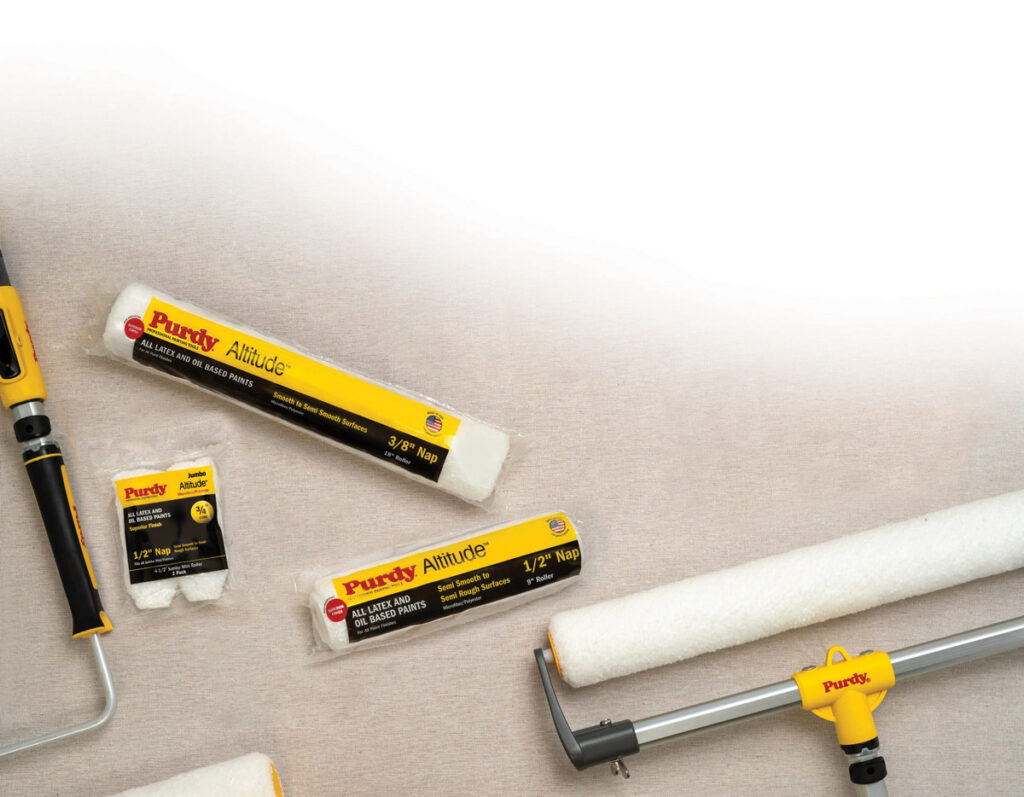
Paired with high-capacity roller frames, woven sleeves, and dedicated care accessories like brush combs, decorators can protect their capital investment and ensure their kit stays project-ready for years to come.
The right Purdy tool transforms tricky architectural details from time-draining bottlenecks into quick, satisfying passes. Ultimately, balancing productivity with an unblemished finish requires moving away from short-sighted savings. By rejecting disposable, low-quality kit and investing in premium application tools from trusted manufacturers, professional decorators reduce job completion times, eliminate costly rework, and secure the long-term profitability of their trade business.
